We've got our decorations up and this Saturday we'll be suiting up to head south into the wilderness to harvest our very own Christmas tree so I'm definitely feeling the spirit of the season. Pictures to follow.
I wanted to share this beautiful book that I was sent to review that is more than just a sweet little book about Christmas. If you've ever felt that Christmas was overly commercial or that the meaning of the holiday was lost among the wrapping paper and price tags then I completely (or should I say unreservedly? Unconditionally? Fervently? Take your pick) recommend that you read What Think Ye of Christmas? whose beautiful message shared through brilliant water color illustrations teaches that the holiday is still there and spiritually thriving if only we take the time to look for it in the many symbols of Jesus Christ. It's simple and full of hope and joyous--all of which we need more of in our lives, no?
The book is by Ester Rasband and this second edition is illustrated by Jana Winters Parkin (a blogging friend, if I may call her that) whose artistic credentials are as impressive as the book she's produced. I'm so pleased that she asked me to review her work because it's not only added a greater depth to my enjoyment of Christmas but has given me a good gift idea for our friends that goes beyond the tasty yet transitory plate of cookies or fudge.
There is a discount on Parkin's website if you purchase more than 5 copies which is a great deal on the already reasonable $9.95 for this hardback book (plus an extra 5% discount if you type CHARRETTE in the discount box at checkout)
She is giving away a copy of the book to one lucky person who will get to see for themselves how great the book is.
Here's how to win:
Before 12 am, the morning of Saturday December 11 go to the giveaway entry form on this page and enter your name and email. I will pick one of the names at random, contact the winner via their email and publish the winner's first name and home town in the following Monday's post. See the bottom of the entry form for more details.
This giveaway is open to all people with a U.S. address. Good luck!
Showing posts with label books. Show all posts
Tuesday, December 07, 2010
Friday, November 12, 2010
Log from the Sea of Cortez

I think I told you I've been on a Steinbeck kick lately--I re-read Of Mice and Men, The Red Pony and The Pearl then I read The Acts of King Arthur and His Noble Knights to the kids while we drove up toward Denali several weeks ago (which is a great book if you're trying to introduce your boys to bigger and harder books without losing their interest along the way). And then there was Travels with Charley. . . . ah, the love of a good book.
This one I picked up at the used book store and made the mistake of leaving it out on the counter in the kitchen too long. Andrew came through, saw it, then took it to read for himself which wasn't objectionable except that he would occasionally get to passages and say, "Oh, this is great--listen to this!" and then he'd try to read it to me. I finally had to do that "I'm not listening to you!" move with my hands over my ears several times for him to get the picture that I didn't want the best parts spoiled. Poor guy.
Eventually he finished it and I was able to read it for myself and thoroughly enjoyed it. If you're someone who goes for a good National Geographic special or (like me) ought to get an honorary degree in marine biology after all the nature shows you've sat through with your kids over the years then this would definitely be the book for you.
One of Steinbeck's nonfiction works, it chronicles his six-week voyage on the Western Flyer with friend and co-biologist Ed Ricketts as they traveled the Sea of Cortez in search of marine specimens. In Travels with Charley he's a knight errant, questing to find the real America. In The Acts of King Arthur and His Noble Knights there are other knights on other quests and in The Sea of Cortez he's once again the knight himself, looking for meaning among the beauty of the sea and looking for connections between the humanity he's left behind and the anemones and sea cucumbers he's observing.
There are sections that are fascinating from a biological standpoint (such as when the crew accidentally spears a sea turtle and brings it on board) and then there are sections that connect with you on a philosophical level (such as when he describes our human trait of hope). However, I promise you that there are things that will make you squirm when read from our 21st century perspective. The amount of death that he and the crew inflict in their collection techniques is a little sickening. I'm not a member of PETA or Greenpeace but I still have a healthy respect for life in any form and some of the passages seem too wasteful for my tastes.
Toward the end the men meet up with a fleet of Japanese fishing vessels who are strip-mining the ocean of shrimp. As Steinbeck describes their harvesting he condemns not only the over-fishing but the waste of life but, with beautiful irony, Steinbeck never sees his own involvement. Immediately after they leave the Japanese ships they find a bay full of 10-foot manta rays and he describes their efforts to kill some of the creatures. They spear several of them and critically wound others but they never stop to think that while what they're doing isn't on the same scale as the Japanese it's the same disregard for life--and perhaps worse for Steinbeck because he could at least recognize the principle of waste in others and their own killing wasn't done for any kind of profit, monetary or dietary, just for curiosity and "because they were there" like a bunch of boys shooting at birds with a BB gun.
But despite this, as I read the book I had the overwhelming urge to go with them and I wondered if anyone had attempted to recreate the voyage. Sure enough, the National Geographic society did just that a few years ago and NPR and The New York Times both picked up the story which you can read at SeaofCortez.org.
Maybe I, too, have got a bit of that knight errant blood in me to let this kind of story drag me along so thoroughly.
Tuesday, November 02, 2010
My Life in France
There are a couple subjects that can be assured to get me talking: movies and food. I love thinking about food, talking about food, tasting food--even taking pictures of food is fun.
If you find yourself as obsessed with food as I am (and yes, obsessed would be the correct term there) you've got to read this book. Julia Child's My Life in France was published in 2009 with help from her nephew, Alex Prudhomme, after he sat down with her to record her memoirs in 2006. She'd meant for many years to write a book about her life but with all the work of writing cookbooks and making a television show she hadn't had the time. As her life was drawing to a close Prudhomme convinced her to make the time and I'm so glad he did because the result is a gorgeous piece of storytelling.
If you've seen the movie Julie and Julia (see, there I go again--food and movies) then much of the narrative might feel familiar to you because the movie was based partly on the book but, as is so often the case, the book is SO much better.
It begins with Julia and Paul Child moving to post-war France, eager and open to anything the new culture can offer and it isn't long before Julia discovers a love of French food and cooking. The story follows their loving marriage, hobbies, travels and the people they collect along the way (she meets an amazing array of cultural celebrities from movie stars to writers and artists, and all before she is even remotely famous). You find yourself falling in love with the place as much as they do and feeling that it's too bad you didn't get a chance to meet the couple because you're quite sure you'd all be best friends.
When I saw the movie Julie and Julia I loved it, but what I really loved was the half with Meryl Streep playing Julia Child. Amy Adams as Julie What's-Her-Bucket was somewhat irritating, whiny and difficult to live with so to find that the book covers the part of the movie I loved PLUS the years beyond where the movie ends was a huge bonus. It's all the good parts and none of the downers.
The book is not only a sweet tribute to the Childs' marriage and the persona behind the celebrity but it's a beautiful photograph of a France that has since been absorbed into the modern world. You don't have to be obsessed with food to appreciate the excellent writing and storytelling taken from Julia's copious journals and letters and you don't have to be a Francophile to enjoy the quirky French and oddly endearing inconveniences of a post-war Paris but by the time you've finished you'll find yourself wanting to whip up an omlet or bone a duck to be just like Julia and see if you too can't learn to live a little more graciously.
A great book.
If you find yourself as obsessed with food as I am (and yes, obsessed would be the correct term there) you've got to read this book. Julia Child's My Life in France was published in 2009 with help from her nephew, Alex Prudhomme, after he sat down with her to record her memoirs in 2006. She'd meant for many years to write a book about her life but with all the work of writing cookbooks and making a television show she hadn't had the time. As her life was drawing to a close Prudhomme convinced her to make the time and I'm so glad he did because the result is a gorgeous piece of storytelling.
If you've seen the movie Julie and Julia (see, there I go again--food and movies) then much of the narrative might feel familiar to you because the movie was based partly on the book but, as is so often the case, the book is SO much better.
It begins with Julia and Paul Child moving to post-war France, eager and open to anything the new culture can offer and it isn't long before Julia discovers a love of French food and cooking. The story follows their loving marriage, hobbies, travels and the people they collect along the way (she meets an amazing array of cultural celebrities from movie stars to writers and artists, and all before she is even remotely famous). You find yourself falling in love with the place as much as they do and feeling that it's too bad you didn't get a chance to meet the couple because you're quite sure you'd all be best friends.
When I saw the movie Julie and Julia I loved it, but what I really loved was the half with Meryl Streep playing Julia Child. Amy Adams as Julie What's-Her-Bucket was somewhat irritating, whiny and difficult to live with so to find that the book covers the part of the movie I loved PLUS the years beyond where the movie ends was a huge bonus. It's all the good parts and none of the downers.
The book is not only a sweet tribute to the Childs' marriage and the persona behind the celebrity but it's a beautiful photograph of a France that has since been absorbed into the modern world. You don't have to be obsessed with food to appreciate the excellent writing and storytelling taken from Julia's copious journals and letters and you don't have to be a Francophile to enjoy the quirky French and oddly endearing inconveniences of a post-war Paris but by the time you've finished you'll find yourself wanting to whip up an omlet or bone a duck to be just like Julia and see if you too can't learn to live a little more graciously.
A great book.
Wednesday, October 13, 2010
Zemindar
by Valerie Fitzgerald
I don't have much of an excuse for being so glaringly absent--though that doesn't stop me from trying to make one anyway. Say it was the hibernation sickness that's coming on with the cold weather, say it was the baking of apple pies, say it was the sewing and cleaning--pick one. It doesn't matter, I've just been enjoying life quite a bit and unfortunately my hands haven't touched the keyboard.
Instead, I've just finished this book given to me by my friend Kathryn who said it was one of her favorites.
Now don't let that smokin' 80s cover put you off--it's a fabulous book. Have you read Gone with the Wind? The Far Pavillions? Forever Amber? Then you'll like this one. It takes its place among other epics where love is caught in the midst of political turmoil and you follow along for 700+ pages wanting to know how the heroine will get her guy and get out alive.
Zemindar follows our girl, Laura Hewitt, as she accompanies her rather rich and snobby newlywed cousin to India for her honeymoon (yes, it's odd and the new bridegroom is there too but apparently that was Victorian England for you). Mrs. Flood (cousin Emily) had snagged Mr. Flood from Laura's affections earlier and now the three of them are visiting India to see if they can't get his half-brother, Oliver Erskine, to make Charles Flood the heir to his immense estate.
The year is 1857 and for all of you Indian history buffs out there, you'll recognize that as the date of the famous sepoy mutiny where the British army (staffed with Indian recruits) mutinied on the British in a rather bloody way. All the English in the area ran for safety to the towns of Cawnapore and Lucknow where they gathered together for a good long siege while the Indians tried to get at them and drive their oppressors from their land.
So you can probably see the plot set up: Laura still loves Charles even though he's now married to her nasty little cousin Emily but then she meets Oliver who is rather arrogant and dashing and then the political problems begin and the whole place blows up. Will Laura realize Charles is a complete dud? Will she recognize Oliver as the man of her dreams? Will Emily get her come-uppance? Will they all survive the mutiny?
It's like Gone with the Wind except here you like the heroine rather than despise her. Sweeping vistas, honor and shame, romance and tragedy--it's all there on the menu but with a vocabulary, diction, voice and development that makes you tip your hat to Fitzgerald's excellent writing skills. I'm not sure why the book is no longer in print because it's a gem.
I don't have much of an excuse for being so glaringly absent--though that doesn't stop me from trying to make one anyway. Say it was the hibernation sickness that's coming on with the cold weather, say it was the baking of apple pies, say it was the sewing and cleaning--pick one. It doesn't matter, I've just been enjoying life quite a bit and unfortunately my hands haven't touched the keyboard.
Instead, I've just finished this book given to me by my friend Kathryn who said it was one of her favorites.
Now don't let that smokin' 80s cover put you off--it's a fabulous book. Have you read Gone with the Wind? The Far Pavillions? Forever Amber? Then you'll like this one. It takes its place among other epics where love is caught in the midst of political turmoil and you follow along for 700+ pages wanting to know how the heroine will get her guy and get out alive.
Zemindar follows our girl, Laura Hewitt, as she accompanies her rather rich and snobby newlywed cousin to India for her honeymoon (yes, it's odd and the new bridegroom is there too but apparently that was Victorian England for you). Mrs. Flood (cousin Emily) had snagged Mr. Flood from Laura's affections earlier and now the three of them are visiting India to see if they can't get his half-brother, Oliver Erskine, to make Charles Flood the heir to his immense estate.
The year is 1857 and for all of you Indian history buffs out there, you'll recognize that as the date of the famous sepoy mutiny where the British army (staffed with Indian recruits) mutinied on the British in a rather bloody way. All the English in the area ran for safety to the towns of Cawnapore and Lucknow where they gathered together for a good long siege while the Indians tried to get at them and drive their oppressors from their land.
So you can probably see the plot set up: Laura still loves Charles even though he's now married to her nasty little cousin Emily but then she meets Oliver who is rather arrogant and dashing and then the political problems begin and the whole place blows up. Will Laura realize Charles is a complete dud? Will she recognize Oliver as the man of her dreams? Will Emily get her come-uppance? Will they all survive the mutiny?
It's like Gone with the Wind except here you like the heroine rather than despise her. Sweeping vistas, honor and shame, romance and tragedy--it's all there on the menu but with a vocabulary, diction, voice and development that makes you tip your hat to Fitzgerald's excellent writing skills. I'm not sure why the book is no longer in print because it's a gem.
Monday, September 20, 2010
Mockingjay and Travels with Charley: Could Two Books Be More Different?
So what have I been doing this past week? Uh . . . not much writing, obviously. I'll give you two words: jam and jam. You'll hear more about that later--and you'll probably hear more about our extremely wonderful week later as news develops but suffice it to say that there was much rejoicing with all that jam and jam and unspecified, yet highly satisfying "good stuff" happening.But besides all that I've been reading.
You see, I had my kids sign up for the summer reading program at the library and to be a good example I signed up for the adult summer program--giving them encouragement and all that. Well it turned out that I won a set of movie tickets during one of the weekly drawings and then I won the grand prize at the end of the program. The big mother prize! The big prize, that is, not the mother who won.
I was pretty excited to get that call and hear I'd won but then I had to laugh when I heard what I'd received: a gift basket from Kaladi Brothers, a local gourmet coffee shop. Heh. And me not drinking coffee. How ironic is that? But then, almost as a postscript I was told I'd also won a gift certificate to the local used bookstore for $100. WOOHOO! Now that's better than a basket full of coffee any day.
And actually, as fate would have it, the gift basket turned out to be nice too because I took it to our nice neighbors across the street who then offered me her week of veggies at the local vegetable co-op while they were on vacation (though they probably would have offered it even without the coffee). Kohlrabi for coffee, now that's a fine trade I'd say.
But the point is, I went down and grabbed a ton of books.
So today we're going to do an old-fashioned compare/contrast like you did in freshman English on two of my most recent reads: Mockingjay by Suzanne Collins and Travels with Charley by John Steinbeck.
I read Mockingjay (the final installment of the Hunger Games trilogy) because of my daughter. She'd read the books and loved them and insisted that I read them too and as I've been a huge stinker about how much I absolutely HATE (yes, in caps--HATE) the Twilight series I thought that it would be a suitable olive branch to read this particular recommendation.I've kept quiet here about my complete and total loathing of Twilight and will not get riled up now as we're not talking about that vapid (I love the word "vapid"--but not as much as I hate Twilight) set of books and Meyer should not be mentioned in the same post as Steinbeck but let the record show that I'm no friend to self-absorbed, horny vampires.
But I digress . . . see how it gets me going? Anyway, as I was saying . . . Grace wanted me to read Hunger Games and it wasn't too bad. I mean it was like watching any of a number of action flicks and kept my attention going for the whole of the plot and since I wanted to know what happened next (always a good thing in a story) I picked up the second book, Catching Fire, and read it too along with my daughter.
It was disappointing. Too many stories have interesting premises that eke out into oblivion as the teller can't figure out how to progress and it felt as if this one was weak and unoriginal. But still--what was going to happen? So out comes Mockingjay and Grace was rabid to find out how everything ended.
I finished it, but having previously read Travels with Charley the differences between the two books was staggering.
Reality Check
Travels with Charley is a travel memoir where Steinbeck takes his poodle and his truck to circle the length and breadth of our great country "in search of America." The book felt good in my hand--a quality paperback that had a thick, stiff cover and beautiful illustrations (by Don Freeman) and an artistic yet solid typeface (yes, I notice those kinds of things). I love the way a good paperback feels in your hands--the curve of the cover, the heft of the paper, the size of the layout--and this one felt as if it were built to last as much as a vintage Ford truck or a pair of Levis.
Mockingjay, on the other hand, is a post-apocalyptic novel. America is destroyed and not only is the theme far from looking for the good or for the truth in one's surroundings, the book is cynical in a cliche Hollywood, trust-no-one fashion that has been done to death. The words are spaced widely on the page as if screaming that it's padded to make you feel as if you're buying a bigger book than you really are and that's true on multiple levels.
Me, Myself and I
Steinbeck, while writing solely about himself and his travels (or maybe about his dog here and there) is far from self-absorbed and egotistical. He thinks and philosophizes and considers, but always in the context of the world around him. There is no navel gazing here, he is traveling and seeing the world with eyes that seek for beauty and depth and bring it to us in a very generous way.
Collins' main character, Katniss Everdeen (ever since Harry Potter characters must have Anglo-Saxon multi-syllabic names designed to evoke stereotypical character traits) spends most of the 200+ pages moaning about "me, me, me." Now I know she's only 17 so perhaps it's to be expected but still. Boy does it get tedious. Nothing works for her, nothing makes her happy, she supposedly loves her mother and sister to the laying down of everything else but yet her actions are completely contradictory to this bedrock character trait.
She's a bit of an anti-hero (if she can claim to be that complex, which one could certainly argue against) who uses people and has the same traits as action heroes everywhere: a complete inability to accept authority or obey rules. She is completely predictable, formulaic and flat--the embodiment of Laura Croft with a touch of Aeon Flux or Electra thrown in for variety. Or not. Sigh. It truly is, all about her and her angst and that gets tiresome.
Who Needs Literature Anyway?
Steinbeck (and I should warn you, I've been on a holy Steinbeck kick these last few months and I'm completely biased here) has a mastery of the English language that few can rival. It's really unfair to compare Collins to him but then who ever said I was fair? I read the book with a new, long pencil sporting a fine, sharp point, underlining passages I liked or found especially beautiful. There is not a page in the book that doesn't have at least one marking on it.
As an example, the opening sentence reads, "When I was very young and the urge to be someplace else was on me, I was assured by mature people that maturity would cure this itch. . . .A journey is a person in itself; no two are alike. And all plans, safeguards, policing, and coercion are fruitless. We find after years of struggle that we do not take a trip; a trip takes us."
He writes about language, about politics, about trash, about food and about racism--and every word is crafted with ease and comfort so that you feel as if you're sitting with Steinbeck in the back of his camper over a cup, talking about his experiences. I wish I had my own talent enough to explain how beautiful it is.
Mockingjay, however, is written as most popular books are today--as a screenplay. It's plot-driven, explosive with violence and pathos, extreme in emotion and environment--all built around that most elusive of modern holy grails: our dwindling attention span. There is no depth of character, there is no reality or underlining humanity (no matter how desperately Collins tries to make us think, "There, but for the grace of God, go we") and no great conflict. Sure, the world is coming to an end but nowadays "conflict" merely means more bullets. And bullets there are aplenty. In fact, many scenes read like the script for the next Quentin Terrantino film with limbs being severed and flesh being melted in ever new and exotic ways but without any significant conflict--the kind that makes you care what happens to people and things.
Quite simply, this is a book written to entertain with action and violence (which it kind of does) without benefit of any other literary tool or unity. Fine. That's what the best-seller list has become and I'll accept that. Why rail against the inescapable? Go with the flow, that's what Steinbeck would have said. Though he would have said it much more eloquently.
Tuesday, August 31, 2010
The Good Earth
When you learn about creative writing one of the first lessons on characterization teaches that characters must be universal--which is just a fancy way of saying that they must be human.But it's also true that some characters are more human than others, no? How often have I read a book (usually a glorified screenplay) to dismiss the actions of a character with an "No one would ever do that!"
The Good Earth by Pearl Buck demonstrates this quality of writing perfectly and effortlessly (as good writing always does--while in actuality being a huge effort of accomplishment) as it follows the life and trials of Wang Lung, a Chinese peasant in the early 20th century.
Buck ties us to Wang Lung through his human frailties--his desire for success and prestige, his greed and pride--and his sufferings. And while I will never be nor will I ever meet a Chinese peasant plagued with locusts, famine and starvation Wang Lung in many ways is no different than a 21st century executive trying to make it in today's world. That's what is meant by universality.
But while Buck follows the rules of characterization brilliantly there are other things that contradict today's conventional wisdom in book-writing; namely, she has very little dialog. Most editors or creative writing instructors would insist that the majority of a book--if not a full 75%--should be dialog but Wang Lung rarely speaks. He thinks and feels and contemplates but he is a solitary figure, moving about in a lonely setting and says little to those around him but instead of creating cracks in the book's structure and language this only goes to enhance the ties the reader has to Wang Lung. Since he says little to his wife, his father and his children we, the reader, are the beneficiary of his feelings and thoughts and it binds us to him as a shared secret binds two people together.
By the end of the narrative I almost feel as if Wang Lung is my child that I've watched grow up. I met him on his wedding day as he went to the nearby estate to bring home his purchased bride who worked as a slave in the kitchens then followed him as O-Lan bore him children and worked beside him to build his farm into a successful plantation. I stuck with him during his days of starvation and his later days of idleness in prosperity, always wanting him to succeed but feeling little hope as his money ruins him and his family.
Not only is the book beautiful in its language and descriptive quality but it treats each character gently and carefully as if each line and paragraph is another stroke of the brush in the portrait. While Buck's characters are universal, her setting is exotic and fascinating and there's a strange feeling of simultaneous regret and relief that it no longer exists. Regret for lost simplicity and beauty but relief for peasant prejudices and superstitions that went with it.
Sponsored by Overstock.com for free online coupons.
Tuesday, July 27, 2010
The Geography of Time
It's funny how when I met my husband I rarely read nonfiction. I think high school and college kind of beat the orneriness into me so that once I could really choose my own books I'd never think of picking up something so dry as a book that had no plot. Ugh. Which reminds me . . . some day I need to do a list of all the things Andrew has introduced me to, with Strange Brew and Shredded Wheat being near the top.But now that I'm so mature some of the best things I've read in the last five years have been nonfiction and I love the feeling that comes from piecing my way carefully through something that completely changes the way I look at the world.
Last month I posted this video on the The Secret Powers of Time and in it they referenced The Geography of Time by Robert Levine. The video was so fascinating that I wrote the book on my reading list then promptly forgot about it until Carina at Babysteps randomly recommended it to me. What are the odds?
So that sent me to the library and I was reading it within the week. Levine is a social psychologist who studies the pace of life around the world. "And how does one measure the pace of life?" you may skeptically ask. Well, he and his minions went to 31 countries around the world and measured three things--how fast people walked, how quickly the local post office would sell a postage stamp and whether or not the local clocks were accurate--then ranked countries accordingly.
Some things were not surprising--that Japan ranks high would be the easiest thing in the world to guess--but the U.S. ranked 16th, left in the dust by Italy, Switzerland (who scored highest), England and Ireland. Go figure. I suppose California kind of balances out the rest of us uptight states.
Levine and his researchers wondered if the same differences would extend between cities and they measured as many cities in the U.S. in the same manner to find that (as expected) Boston and New York were tops on the list while California cities were left back at the beach. Not surprisingly those same fast cities were also the highest in coronary disease with one exception--Salt Lake City. Scoring as the fourth fastest-paced city on record those Mormons are apparently constantly scampering around, running from church meeting to church meeting but as they don't smoke or drink, they alone of all the fast cities are spared the heart attacks.
Levine's team wasn't satisfied with their results and went back a third time to measure if those same cities whose people moved so fast were also willing to help strangers in need. In short--does pace of life also affect to your willingness to help others? Sure enough, it does. The tests were, again, of a three-part nature but I've got to jump out of line here and tell you what he said about New York. They did simple things such as dropping an item to see if anyone would retrieve it for a stranger but they also put test envelopes on random cars. The envelopes were addressed and stamped and the testers wrote a note on the back of the envelope saying, "I found this letter next to your car, did you drop it?" They then slid the envelope under the wiper blade and waited to see what their subjects would do with a letter that obviously wasn't theirs.
Many letters across the country were tossed in the mail to be mailed back to the laboratory but Levine poked fun at the levels of courtesy the test received. Some letters were sent back opened or tampered with and one letter from New York City--get this--was returned opened and included a rant cursing and swearing the person for being stupid enough to have dropped their letter in the first place.
I love it. New Yorkers are busy but apparently they're even meaner than they are busy and it's worth taking five minutes if you can be sure of ruining someone's day. Levine noted that perhaps the New York points shouldn't have counted on this particular subject as proof of their level of courtesy--after all, they did return the letter and the experimental conditions were met--but he wasn't sure something so spiteful should be added to the total point spread in the city's favor. Heh.
And under the subject of "good news": you can be proud if you live in Tennessee. While up against cities across the entire country (well, in the Lower 48 at least) that beautiful state was able to boast the top three or four most helpful cities, which (if you've ever been to Tennessee, is totally for real). The study, overall, found that a face pace of life was a pretty good indicator that people living there would not be likely to help a stranger in need (Mormons included). But it also showed that being slow-paced, such as in California, did not necessarily indicate a propensity to be courteous.
In fact, California, in it's own laid-back way, scored horribly. Levine posits that it's because California, while comfortable and relaxed, embraces a culture that is all about the individual and personal gratification--hedonism at its finest and most expensive. What makes Tennessee--and many other high-scoring southern cities--different is that while they're slow and relaxed they also have a culture that values courtesy and manners. You help someone because it's the right thing to do and you do it with a smile and a "yes'm."
Anyway . . . I'm rambling but the whole point of the book (which was something I'd never stopped to consider in all my life) is that our perception of time is largely shaped by our climate, our gross national product, our religion and all these things (plus a few others) coordinate to determine how we feel about time and therefore how we live our lives. I go through my day, looking at my watch and coordinating events from hour to hour, which is a distinct representation of how I was culturally taught to view time and not because I merely conform to some innate propriety of how mankind should ideally operate as set forth by the gods.
I guess it's like thinking that I like vanilla ice cream so everyone in the whole world must love vanilla ice cream too (and they should--it's the best). Levine goes a good way to showing how not only does not everyone like vanilla ice cream but most don't even know what it is and would laugh at me for thinking the sweetened, frozen milk of a cow the best treat on the planet. Which I guess is really quite fine because, in the end, it just means more for me.
Sponsored by Storkie.com for baby birth announcements
Monday, July 05, 2010
They Saw It Happen
Just a light posting today. I don't know if you notice but I normally save bigger posts for Mondays but then today isn't just any old day.Because Independence Day fell on a Sunday this year, we're doing our celebrating today and I'm betting many of you are doing the same thing so we'll take it easy together, shall we?
Besides, I've got a fabulous giveaway running this week that I'm posting today as well so in reality you're getting double the bang for your buck--be sure to check it out because I'm very excited to be offering such a fine prize.
Lately I've been doing a bit of knitting and crochet and quilting--things with my hands--and it drives me crazy to just sit there, staring at the yarn without a thought in my head so I like to listen to audio books while I'm working or exercising. I found this gem on Listen Alaska that allows you to download audio books in both WMA and MP3 formats as if you were checking them out of the library. So it's free people, free, free, free!
They Saw It Happen is a collection of first-hand accounts of various historical events. Sound ho-hum? Not at all! Each segment is given by an actor (sometimes with appropriate accents) as if they were the writer speaking to an audience, telling about whatever event they had the privilege of viewing. Starting with the battle of Thermopylae in ancient Greece (aka 300 for you graphic novel fans), through the Crusaders taking Jerusalem, the fall of Masada, the Black Death of the 14th century, the execution of Charles I, the great fire of London, the Salem witch trials, the Boston Tea Party, the execution of Louis VI, the battles of Bull Run and Little Big Horn, the San Francisco fire, the sinking of the Titanic, the opening of King Tut's tomb, trench warfare in World War I, the Wright brothers first flight, Lindbergh's Atlantic crossing and the atomic bomb on Hiroshima. To name just a few.
However, some of the segments are those where someone is observing a famous person and giving their general impressions--such as Napoleon or Marie Antoinette--which gives you a strangely personal and intimate look at these historical celebrities. Some segments are written by average people or reporters who describe what life was like in their world. For example, they have people giving their impressions of public executions, child labor, cock fighting or a slave auction in Virginia. One woman--a social worker from 19th century Paris--even described the horrors of prostitution in London in the most moral and Victorian of ways and it was just as fascinating as the other parts.
Perhaps the most interesting was the narrative by a naval midshipmen stationed on the U.S.S. Arizona and who survived his crew and his ship when the Japanese attacked Pearl Harbor. His first person narration of the fight is at the same time horrifying and moving and the narrative that follows his account is by a Japanese pilot who flew one of the bombers for his own country that same morning. Strange to hear two men speaking of the same event from their own perspectives and I tell you it makes an impression.
The most disturbing account was the official statement made by Rudolph Höss, the commandant of Auschwitz. During the Nuremberg trials he signed a sworn statement which an actor reads, making you feel as if you were sitting down to tea with the man who is credited with killing three million Jews. He describes his career and the conditions in the camps and his pride in his efficiency in executing so many at a time--all with a cold-blooded carelessness that is terrifying.
So if you're a history enthusiastic or even just a person who likes a good story I'd recommend this for your listening library. I've burned the four parts onto CD and plan on keeping this one around and forcing my children to listen to sections from time to time. It'll be a good way for them to get a dose of what life was like outside of the 21st century.
Sponsored by findourschool.com--Find the perfect school in your area.
Thursday, June 17, 2010
Modern North and Modern Architecture
It's been a bit since we've talked architecture but a few rather exciting things have happened relative to the subject.You see here the newly published book, Modern North: Architecture on the Frozen Edge by Julie Decker which gives tours of 34 buildings in northern climates from Alaska to Canada to Finland and back to Alaska.
Why is this interesting? Besides being a gorgeous book on architecture it features three residences designed by Bruce Williams of Black + White Studio Architects who is a master of modern residential architecture and who brilliantly designed our 2009 remodel.
In fact, our remodel is featured in the book on pages 202-205. Woo hoo! I have to say that, to me, this is vastly more exciting than having the casting director of MTV's show Cribs calling to see if we'd be interested in having a film crew drop by (and don't worry, once they realized they were dealing with a house that had a mere two-car garage with aging vehicles and a family that didn't even get cable they were suddenly less interested and never called again).
What makes this so exciting is the excellent company we are alongside--you see above the Buser-Chapoton Residence in Big Lake, Alaska designed by Mayer Sattler-Smith where the exterior material is charred wood. Yes, you read that right, charred wood. You'd think that would be odd but not only does it reflect its environment it gives the home a unique and strangely beautiful look--rather like the effect of a sun setting through clouds--and it goes to show what new and bizarre (yet exciting) things are being done in modern architecture.The kids love flipping through the book and while we were out and about last week Lillian happened to see the BP Energy Center (featured on pages 120-125) and though she was a hundred yards away and it was largely blocked by the trees she saw it and got very excited to recognize the building from "our book."
By far my favorite building featured (besides our own house of course) is St. Henry's Ecumenical Art Chapel in Turku, Finland designed by Sanaksenaho Architects. We've stared so many times at the picture you see above that the book tends to naturally open at that page.
The warmth of the wood, the upward sweep of the walls, the graceful curve of the lines, the beauty of the light and absence of distractions all make it a place where one would truly be ready to worship. Now I'm not saying I'd like to sit for two hours on one of those benches, but I bet I'd find a harder time falling asleep in church with a view like that.
From the outside it looks like the hull of a ship rising from the ocean (perhaps a metaphorical ark?) and it just goes to show what beauty can be achieved when creative people combine with brave souls not afraid to build a structure that doesn't look like the box next door.So if you have $32 to burn I suggest checking the book out (and they didn't even pay me to say that), especially if you live somewhere cold and are interested in modern residential architecture.
And if you'd like to see more of the genius of our own Anchorage architects you ought to the Black + White Studio Architects site which my dear husband Andrew recently redesigned as it features completed projects (such as our house) but some others that are in progress such as a house that is being built in Hawaii on a black and desolate lava field.
And if you delve deeply into the site you'll find their mission statement which is presented as a video clip in a rather unique way. Do those lips look familiar? I'll give you a wild guess as to who provided that mouth.
Sponsored by Storkie.com for baby birth announcements
Thursday, June 10, 2010
The Oxford Book of Adventure Stories
edited by Joseph BristowWe've been participating in our local library's summer reading program. Grace signed up first thing and the boys mocked her until they saw the movie ticket she got as a half-way prize then they ran to join up too. Now I've got them reading all over the place.
Thank you public library, thank you.
But one thing they've let me read to them is this wonderful book, The Oxford Book of Adventure Stories which I got at a used book store for a couple dollars last year. As the title would suggest, it's full of stories of adventure about such wonderful things as man-eating tigers, pirate sieges and jungle warfare.
Everything a budding young adventurer would find interesting, it's in there. They're arranged chronologically starting with Edgar Allen Poe's "MS Found in a Bottle" all the way to Margaret Atwood's (one of two women represented in the anthology) "Death by Landscape."
We've been checking them off one by one and so far we've been through H. Rider Haggard's "A Tale of Three Tigers" which had all the drama you'd expect from a title such as that, plus Bram Stoker's "The Red Stockade" which particularly wowed them when the pirates stuck their enemies' heads on pikes, and Robert Louis Stevenson's "The Isle of Voices" complete with Hawaiian witch doctors and mysterious magic.
There are also stories by H.G. Wells, Jack London, Mark Twain, Rudyard Kipling, Arthur Conan Doyle, Zane Grey, and Ian Fleming plus other assorted greats that deliver spies, World War I flying aces, big game hunters and draft dodgers. Some of the language can be difficult for younger audiences so that if my boys were to read it themselves they'd struggle a bit but having me read aloud to them where we can stop and explain difficult words or archaic expressions helps with their comprehension and keeps them going with the plot.
And best of all? With short stories you can finish one in half an hour then put it down until next time. One complete story, start to finish, that satisfies like a complete meal rather than picking away at chapters over months. You never have to wonder where it was you left off or try to pick up characters' names again, things like that. Wonderful for summer reading.
***
Here's a list of the 50 Best Books for Boys and Young Men at the Art of Manliness if you're looking for a longer menu and some of them are duplicated on my own list of Great Read Aloud Books for Boys. You might also see Raising a Reader and Activities that Encourage Reading as well. Summer is a great time to pick up a new book.
Sponsored by Dimples and Dandelions for Serena and Lily baby bedding.
Thursday, May 13, 2010
The Thirteenth Tale
It's not often that I finish a book in a day--or that after that 24 hour period I sit down to pump out a review but people can always surprise you, right?My aunt assaulted me with this book, literally (or literarily, take your pick) pushing it into my hands, saying, "Oh Michelle, you've GOT to read this!" and with an introduction like that what else are you going to do but read it? My biggest complaint was that I was already reading The Feast of Roses (the second in that Indian princess series?) and it kind of ruined the last half of the book for me because suddenly my curiosity was so rampant that I couldn't wait to get started on the new read.
Diane Setterfield's debut novel is a modern 19th century gothic romance (and no, that's not an oxymoron) of the kind that were considered so low and vulgar to the gentry in their drawing rooms but which they devoured in private. Plot-wise it's about Margaret Lea, a ferocious reader and book seller who meets up with the biggest novelist of the day, Vida Winter, who in her last moments of life wants Margaret to record her life story.
Ms. Winter has successfully been dodging questions about her origins for her entire career and when she finally spills those beans she lets loose a ghost story of horror, abuse, tragedy, insanity, love and twins--Adeline and Emmeline--who are born into the declining Angelfield family and live as feral children on their English estate which is as delapidated and moldering as the family who inhabits it.
It's obvious that Setterfield is a fan of the Brontes, Wilkie Collins, Dickens and the rest of the 19th century Brits writing club because not only does it have the twists and turns and shocking secrets á la Jane Eyre or The Woman in White but it also deals with the scandal in 19th-century terms which means you have to do some reading between the lines to come to your "Oh, so THAT'S what the villain did!" moments.
Setterfield has a fine hand as a writer, her prose is clean and careful and her descriptions and characterizations are lovingly thorough. As a mystery writer she does a fine job of leading you along and brings you to the end without cheating you of the satisfaction of an appropriate and entertaining ending.
What can I say? Twenty-four hours is all it took me to get through it. I suppose that's the best endorsement of all.
Friday, April 23, 2010
The Twentieth Wife
Oh I found a good book! Don't you love it when you come across a book that you just devour and then stare blankly at the final page, wishing there were more?I came back from India desperate for more of the country, with random lines of Kipling floating through my brain, O Best Beloved. (And here I should say that if you haven't yet read the Jungle Books or Just So Stories you cannot leave this life without doing so. To say the language is gorgeous is an understatement of elephantine proportions).
But we're not talking Kipling today folks. When I asked her for books on India my mother gave me a novel by Indu Sundaresan called The Twentieth Wife and I absolutely loved it. Historical fiction has always been my favorite genre so to find a historical novel about India was just what I was craving.
India's history goes back five thousand years with various groups coming in and adding to the culture but the Mughals were the rulers that essentially brought Islam to India. They ruled across the north and in what is now Pakistan then down into the Deccan plateau which is where we traveled. Descended from Genghis Khan himself, there were six major emperors--Babur, Humayun, Akbar, Jahangir, Shah Jahan and Aurangzeb--with the Mughal rule ending with British control of the subcontinent. For quite a time the Mughal empire was the biggest and richest in the entire world.
You're probably familiar already with one of these rulers, Shah Jahan, who was most famous for the love he had for his wife, Mumtaz Mahal, who died in childbirth with their 14th child. In tribute to her--the story goes--he built the Taj Mahal as her mausoleum.
But enough history. The point is, The Twentieth Wife tells the true story of Mehrunnisa, a commoner who becomes the Empress of India, the famous Nur Jahan, and the power behind the peacock throne during the early 17th century. Royal intrigue, love, romance, tragedy, torture, power and lust--it's all there in abundance--and while much of Mehrunnisa's early life and personality is conjecture, the story is founded in fact as recorded in her husband Jahanagir's journals, historical accounts and the writings of visitors to the Indian court.
The story is interesting and the details transporting (I got very excited when they mentioned Golkonda Fort where we spent a few hours baking in the heat last month) and it's as exciting a story as you could want with all the exotic flavors of curry, jasmine and mangoes.
One of the things I particularly liked about the book--besides the fact that it's uncommonly clean--is that each chapter is headed with a paragraph from the actual historical documents upon which the story is based. Some are from court transcriptions, some from poetry and prose, some from English historians visiting the empire but all giving the real words of those who knew the Empress and knew her story and it gives the narrative a touch of authenticity.
I'm starting the sequel that continues Nur Jahan's story--The Feast of Roses--and if it's as good as the first book I'll be reading the last book in the trilogy, The Shadow Princess, which picks up the story with Nur Jahan's grand-neice after her mother Mumtaz Mahal dies in childbirth.
Now if only I could get Sundaresan to write books as fast as I can read them. . . .
Sponsored by Beau-Coup for unique baby shower favors.
Saturday, March 13, 2010
Green Darkness
by Anya SetonPlots are funny things. Characters rarely behave with any kind of wisdom and if they did there wouldn't be any plots, now would there? I don't know how many times I read a book or watch a movie and think "Well this is just stupid! If he/she/they just did this [fill in the blank] then everything would be fine." But that's usually the point where Andrew gently reminds me that if everyone in stories behaved in such an admirably enlightened manner I wouldn't bother to watch. Train wrecks are so much more entertaining.
That's how Green Darkness fits into my thoughts. I spent most of the 600 pages rolling my eyes at the main characters, shaking my head at how irresponsible they were but you know who had the last laugh because I followed them all the way to the end of those 600 pages.
Here's a run down of pros and cons for reading it yourself.
Pro
Celia is a fabulously wealthy and rather plain young American who has recently married an English nobleman for no discernable reason . . . oh, wait. I get it. That's why he married her. Anyway, as I was saying . . . Celia is married to an ancestral model of British nobility and gentility, Richard Marsden, and as a heroine she's nice enough. Though I do just wish she'd get a bit of starch in her and let old Richard have it. And I don't mean the checkbook.
Con
Richard Marsdon, her aristocratic and aloof spouse, isn't much of a romantic lead. In fact, as a husband for young and fragile Cecilia he really stinks. Unless of course you like your leading men as a nasty blend of self-absorbed, brooding and dangerous. Wait! That pretty much sums up the Twilight series, Wuthering Heights, Revenge of the Sith and Jane Eyre, doesn't it? Maybe there's something to that combo.
Pro
Richard and Celia are having difficulties. We don't know why because heaven knows she's presented as perfection but for some reason that's not sitting well with Mr. "It's all about me." So after some dramatic swooning suitable for any romance Celia is whisked back, back, back in time to 400 years previous when she lived as the raging beauty Celia de Brohun.
Time travel is good, isn't it?
Con
The whole thing is attributed to reincarnation (which apparently Anya Seton totally bought into) where Celia and Richard are the Main Characters Formerly Known As Stephen and Celia. No explanation as to why he gets a new name and she does not.
I suppose Seton had to have some way to get them back 400 years and the reincarnation thing works about as well as anything it does give a very Shirley McClaine-esque feel to things. In a word, flaky. Very odd, very Hollywoodish and very stereotypical with the introduction of the requisite mystical Indian doctor who is the only one able to mend the rifts of space and time for our dear heroes in peril who are stuck, comatose in the present, as they relive twenty years from their former lives in warp drive.
Pro
As a historical romance it delivers pretty well. Seton was inspired to write the book after visiting Ightam Mote in Sussex, England where rumors had circulated that a female skeleton had been found, imprisoned in one of the walls where bricks had been mortered up around the girl while she was alive. Seton went back and figured out a story to explain this mysterious circumstance and that "How does she end up stuck in the wall?" question has you turning pages over and over again.
Con
In Richard's previous life he lives as the superhuman monk Brother Stephen who just happens to be rippled with muscles, chisled in features and so oozing with virility and masculine pheromones that every female for hundreds of miles can't withstand his powers. But if Hollywood has taught us nothing, it's "don't hate me because I'm beautiful" and his looks are more of a curse than anything as he struggles to not turn poor Celia on.
Celia? Well she's his female counterpart. Blond, willowy, long flowing hair, perfectly shaped--she's got it all and dear Brother Stephen breaks out into the sweats every time she shows up. The two of them do this "No, I really REALLY want to but I can't" thing for 400 pages to the point that I found myself saying "Oh just stick her in the wall already and have done with it! Leave the poor man alone with his vows for goodness sake!"
Pro
It's the Tudors. Need I say more? Celia goes back 400 years to her previous life during the reign of Edward the VI which is always good for some drama. Catholics, Protestants, courtesans, Scots, priests, scourgings and burnings--it's all there. Nothing keeps me turning pages like a good heretic burning.
So there you have it. I never found out what was green or what was dark--that whole title thing was completely ambiguous--but it didn't matter. I still read every page and liked it well enough. In fact, I liked it enough to grab Seton's other novel Katherine for my plane ride next week which promises to also be engaging, though without as many heretic burnings. Darn.
***
Sponsored by Annette Lyon, whose new novel Band of Sisters is now in print. Annette is also working to help families of deployed servicemen in the Flat Daddy Project in connection with the release of her book. See her website for more details.
Thursday, March 04, 2010
The Guernsey Literary and Potato Peel Pie Society
by Mary Ann Shaffer and Annie BarrowsI have a friend who gives me book recommendations from time to time. I'll admit that I actually don't take book recommendations willing, when someone tells me about a book they're reading and how much I'd be certain to love it I usually smile blandly and nod and say something like, "I'm sure--maybe I'll check to see if the library has a copy" or another equally ambiguous statement.
You see I don't trust too many people when it comes to books. If I see a movie that I don't like I just figure that I've wasted an hour or two of my time and that the odds were against it being a great production anyway, seeing that so many bad movies make it to theaters, but a book is a considerable investment. Hours, days, maybe even weeks. It's very difficult for me to put a book down, I have this compulsion to finish it as if it's a plate of that nasty green bean casserole from my childhood and my mother is hovering overhead telling me to clean my plate, that it's good for me.
So if I get into a book and it's not holding up its end of the bargain I have a hard time actually signing the divorce papers and I find myself at the end of a miserable relationship wondering why I didn't cut bait ages ago. I just can't take that kind of emotion and waste.
However, I have known this friend since we were children and in the last five years I've been able to get to know her well and she's intelligent, interesting and a thinking person. You know the kind I mean--someone who has thoughts and opinions and reasons for why she may or may not do something. In short, a book she reads is one that already has a foot in the door with me.
She showed up one day with this book in her hand, gesturing with it as she talked, and saying how I must read it--she was sure I would like it. If it had been someone else I might have flipped through it casually, skimming key paragraphs as if I was trying to fake it through a pop quiz, then returned it with a thank you but instead I found myself taking it with me on my ceremonial parking-lot-waits at the school while Spencer had ski practice.
It's really a charming book. Charming because it's British, charming because it's epistolary (correspondence from one character to another) and charming because of its post World War II setting. It feels as if you're sitting down to tea and overhearing the characters at the next table as they tell their stories and laugh together so genuinely that you strain to hear every word.
The book follows Juliet Ashton who is a writer that stumbles into a correspondence with people on Guernsey, one of the Channel Islands and the only place in England to have been occupied by the Germans during the war. The islanders are recuperating from years of privation and are very willing to make her acquaintance and share their stories which, of course, inspires her writing.
Yes it's completely predictable, slightly formulaic and the characters are all stock. If you've seen a BBC production of any of the Miss Marple mysteries (or any other English country drama) then you already know the staples you can expect to find. But that doesn't mean it's not enjoyable. I happen to like Miss Marple mysteries, thank you very much.
It's an easy and a quick read. I think it took me three or four ski practices to get through it, not counting one ski meet, and it reminds me of other classics in the genre on this side of the Atlantic such as Cold Sassy Tree or Fried Green Tomatoes. Homey, down-to-earth and full of little fun characters waltzing in and out of the narrative with all their eccentricities waving in the breeze.
So if you've got an afternoon without any obligations, pull out a blanket and some cocoa and give it a read. Don't let it put you off that Stephanie Meyer raved about how she loved it (that's what my teen daughter told me after I'd read it and thank goodness I didn't know that before I picked it up or I may never have cracked the cover--an approval from Stephanie Meyer is only one step above a spot on Oprah's book list in my opinion). You'll love it. I'm quite sure of it--take my friend's word for it.
Sponsored by Annette Lyon, whose new novel Band of Sisters is now in print. Annette is also working to help families of deployed servicemen in the Flat Daddy Project in connection with the release of her book. See her website for more details.
Tuesday, September 22, 2009
Crossing to Safety
My favorite writer of all time is Wallace Stegner (I apologize to those of you who have heard me carry on about him before but the man's a genius) and while I've read this particular novel before I figured it was time for a re-read. The best books always bear repeating.What makes this novel so good? You mean besides the prose so smooth you feel as if you're floating down a river with the sun shining down? Or the characters drawn so masterfully you can hear the distinctions in their dialog? Or the themes that, while eternal, are so modern, thoughtful and resonant that you find yourself nodding your head as you read?
Stegner grew up in Saskatchewan but lived in various places in the central United States (Salt Lake City, for example) and the land plays a central role in his stories. He also follows the themes of family and marriage, love and unity, pride and failure in a way that convinces me he's the greatest contemporary writer of all time. I'd stretch it to say greatest writer ever but it's not fair to put Milton and Shakespeare and Tolstoy up against Stegner. Because they'd lose.
Anyway, Crossing to Safety is one of his later books which is the story of a friendship between two couples: the Morgans and the Langs. The Morgans have no family, no money but lots of hope and promise and the Langs are old money, New England aristocracy and an uneasy marriage struggling to find equilibrium.
It follows their story as a flashback, the two couples have come together again at the end of the journey when Charity Lang is dying and she's summoned her friends to her side in her final days. Larry Morgan, now a successful writer, tells the story of their lives together from the time they met while teaching college in Wisconsin during the Depression to their lives during the war and raising their families to the eventual end of the road.
Stegner talks about life at the university and that old "publish or perish" dogma that haunts the men of the story, the process of writing and publishing along with talent and hard work, the roles in marriage and of men and women and through it all he describes the fascinating interplay of characters and personalities without condemnation but with thought and sincerity. He builds these two couples until you feel as if you know them intimately and love them both though if I had to confess the person I love intensely is Stegner. If I could pick anyone on the planet I'd rather have an evening of conversation with it would be that man. Did I mention he taught at Stanford for years, building up their creative writing program with such genius that it's the program most others across the country are now modeled on? Yes I'm definitely a groupie. It's unfortunate that he died back in 1993 because I'd be his official stalker.
I could give you example after example of his beautiful words but rather than overload you I'll give you just a sample:
And so, by circuitous and unpredictable routes, we converged toward midcontinent and met in Madison, and are at once drawn together, braided and plaited into friendship. It is a relationship that has no formal shape, there are no rules or obligations or bonds as in marriage or the family, it is held together by neither law nor property nor blood, there is no glue in it but mutual liking. It is therefore rare. To Sally and me, focused on each other and on the problems of getting on in a rough world, it happened unexpectedly; and in all our lives it has happened so thoroughly only once.Oh to write like that. Viva la Stegner!
We straggled into Madison, western orphans, and the Langs adopted us into their numerous, rich, powerful, reassuring tribe. We wandered into their orderly Newtonian universe, a couple of asteroids, and they captured us with their gravitational pull and made moons of us and fixed us in orbit around themselves.
***
Congratulations to Giovanna from Cambridge, Massachusetts for winning this weekend's Beau-Coup giveaway, and also to Faith in Malibu, California for winning last weekend's FLOR giveaway. Prizes, prizes, prizes!
Sponsored by Pak Naks--decorate your stuff!
Thursday, August 20, 2009
Books Guaranteed to Make You Think Your Life Isn't So Bad After All
While I was feeling so "woe is me" over here I decided it was time for a pick-me-up. Time to put together a list of things that showed that in fact things are not so bad after all. I like book lists anyway and usually I'm okay with a sad ending but the guys on this list go way beyond mere sadness and slip right on down into to absolute, abject despair with a side of creamed Zoloft.Forget merely shedding a tear or two at the end, when you read these books you're safe from thinking that someone's grass is a little greener and instead are quite sure that your own little patch of sod with a few wayward dandelions will do quite nicely, thank you very much, because the stuff on the other side is trampled dead and is probably seeping with underground toxic waste.
Cheery, huh?
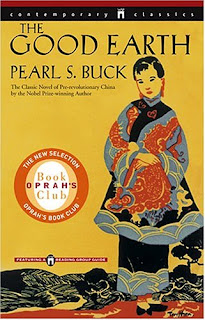
1. The Good Earth by Pearl S. Buck
You may be down on your luck but at least you aren't an impoverish Chinese peasant plagued by malicious family members and starvation, right? It could always be worse. And of course by the end of this book it is worse. You follow the fortunes (or misfortunes) of Wang Lung's family as they face malnutrition, set their children to begging, endure war, pestilence and calamities and still make it through for 300 pages to the gloriously bitter, tragic end.
I bet if you knew nothing about this book but that I told you it won both the Pulitzer and Nobel prizes you'd know for sure that it was a real downer because everyone knows the real glory always goes to books that convince you you're glad you're not the next guy.
2. Escape from Sobibor by Richard RashkeI must have something about the Holocaust on a list like this but not just any old book or movie would do. If I'm not careful I'd put up something like Schindler's List or The Hiding Place that, while terribly sad and depressing, is able to pull itself from the ashes long enough to give you a taste of true human courage and resilience. That man (and woman) can succeed and be better than their surroundings. But that wouldn't do for a list like this.
No, I needed something that wasn't quite so cheerful and this one will do nicely.
This novel tells the story of the most successful uprising ever at a Nazi extermination camp. Notice I said "most" which should give you an idea of the level of rosiness you can expect from this one. I believe this was made into a fine movie with Alan Arkin (a favorite) but don't expect it to have any song and dance numbers--and bring the Kleenex.
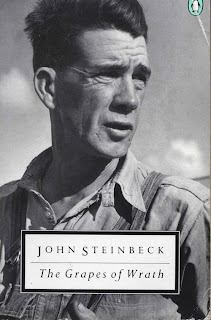
3. The Grapes of Wrath by John SteinbeckCan any one of you honestly tell me that there isn't a final scene in all of Western literature as depressing and gut-wrenching as the one at the end of this colossus?
Of Mice and Men is sad. The Pearl is even sadder (and pointless). But this? This closing scene is not only sad but disturbing and despairing in a way that a mere euthanasia or infanticide can't rival. Rose of Sharon nursing a homeless man in the barn as everyone succumbs to poverty and ruin is pretty much the complete antithesis of Cinderella and I still remember the shock of reading that scene for the first time. It's like the exact opposite of Disney and it sticks with you. Ugh.
4. The Little Match Girl by Hans Christian Anderson
It was probably the Cinderella reference that triggered this memory but if you've ever had the mistaken notion that fairy tales are about happiness and fairies you haven't read this one.
In a nutshell the plot is this: A little girl--on New Year's Eve of all times--is out in the cold, frigid night selling matches. No one is buying her matches but she can't go home because she knows her father will beat her for not finishing her work so, freezing and alone, she ends up striking a match to keep warm.In her hypothermic condition she slips into hallucinations that end with her grandmother, the only person to have ever shown her any kindness in her meager life. Striking match after match to keep the vision alive the girl's grandmother eventually takes her home with her and in the morning the townspeople find the little girl dead in the snow.
Yes, that's a bedtime story for you. "Nighty-night kids. Go to sleep . . . see you in the morning!"
5. "Misery" by Anton ChekhovNot actually a novel at all but a short story and I'm going to include it anyway. With misery as only the Russians can tell it, it is the story of a cart driver in Petersburg (I think) who, during one particular winter, picks up passengers and takes them to their destinations.
Each person he carries is in a hurry and eager to get where they're going but none understand his pain because yesterday his son died. He tries to tell his grief and misery to someone but no one will listen so he eventually talks to his horse.
It does not get more pathetic than that.
Even Crime and Punishment had its bright spots but this? Nothing but misery--which is probably why it's titled like that.
6. Angela's Ashes by Frank McCourtI can't remember why I even bothered to read this one, it is so not my style, but read it I did and talk about depressing.
Written as a memoir, the McCourt family lives in poverty in Brooklyn but that's not quite enough for them, what they're looking for is real poverty so they return to the homeland--Ireland--to remedy the mistake their parents made by emigrating in the first place. After all, there can't possibly be a good reason for them leaving a country whose population was starving could there?
So back they go and little Frankie records his father's alcoholism, his mother's begging and his siblings dropping like flies from the horror of it all.
But survive he does only to end up on a boat back to America to meet up with prostitutes (apparently the Welcome Committee) in time for the closing pages. Grim doesn't even begin to cover it but oh how those Pulitzer people loved it.
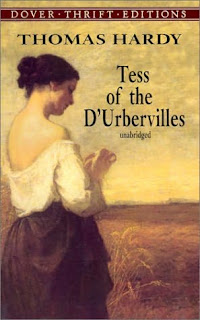
7. Tess of the D'Urbervilles by Thomas HardyGirl is pressured by family to work for rich relatives. Rich relatives--namely dissolute son--think girl is hot and seduce girl, making her with child. Family is not so happy but girl returns home to have baby whereupon baby dies at birth. Girl tries to get life back together and eventually finds True Love. She's worried True Love won't like her sullied past but takes courage after he confesses one of his own sins to her.
Bravely girl tells True Love about her past and the wrongs committed against her but instead of acting like a human being True Love dumps girl with self-righteous horror. Girl goes back to original seducer-guy who never stopped lusting after her. When True Love finally comes to his idiot senses and realizes his mistake and goes to reclaim girl he finds her shacked up with original Bad Guy.
When girl realizes that True Love has come back she takes the only route she sees available and stabs Bad Guy, effectively removing him from the equation and allowing her to pursue life with True Love (even though he's late to the party). Of course the local law enforcement isn't as sympathetic with her plight as we, the readers, are and end up hanging her for that whole pesky domestic stabbing episode. Oh, and True Love ends up marrying her younger and purer sister. It's a story you'd see on Jerry Springer.
It's a toss up as to which is more depressing--Tess or Jude the Obscure which I won't summarize because it would make this entry too long but trust me, it's possibly worse than the fallen woman done wrong story.
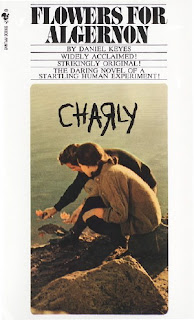
8. Flowers for Algernon by Daniel KeyesWritten in 1966 this is a science-fiction style story where a lab mouse, Algernon, is treated to increase his mental abilities. Charly, the first human test subject, is a mentally retarded man who at first responds well to the treatment but soon realizes his gains are short-lived as Algernon regresses to his previous state in an ominous foretelling of the future Charly himself can expect to suffer.
Nothing like descending into darkness and knowing just enough to comprehend your prison to brighten the mood. Not a happy story. Not even an inspiring story--just sad and gooey like a melted Rocky Road bar that's been left on your car upholstery in the hot sun. Not a pretty sight.
9. L'Etranger by Albert CamusI should say anything by Camus is worthy of this list but instead I'll focus on this, my first introduction to this existentialist-who-claims-he-not (which is indeed ironic if you ask me, kind of the complete opposite of the whole philosophy, n'est pas?).
I read L'Etranger (or The Stranger) in my French studies in college alongside other cheeries such as Graham Greene's The Power and the Glory. Boy that's a cure for what ails you. If you're ever feeling like you have too many friends and your life is going just too darn good and what you need is some good ol' fashioned nihilism and abandonment then this is should be the first stop on your road trip to Agony-ville. Population: 1.
Oh, and before I forget, the story is about a man who kills an Algerian man while on vacation (because nothing says relaxation like a bloodthirsty crime) and the accompanying results of his actions. Skip it.
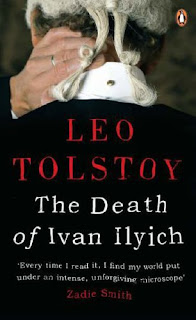
10. The Death of Ivan Ilyich by Leo TolstoyThis novella is almost too moral to be included on the list (because after all, if the reader actually learns or gains something rather than feeling as if all is lost then it's not really depressing but instead rather enlightening) but regardless I'll include it just for the sake of the Russians.
I could have padded this whole list with Russians--Crime and Punishment with its axe murdering student, Anna Karenina with its tribute to Amtrak, The Brothers Karamazov with some juicy patricide but really, where is the challenge in that?
Instead I'll just leave you with this story where the titular character, after an accident that leaves him dying a slow death over a period of weeks, realizes that not only was he a jerk and a rotten husband and father but that he lived completely for himself as selfishly as one can. While this causes mental anguish worthy of this list the real cherry on top is that deep down (I think) he still really doesn't care about his actions and that he's just screaming because he's dying--and dying alone. No remorse, just more selfishness.
Yea, that Tolstoy must have been the life of the party.
Sponsored by Tiny Prints for the holiday party invitations for children.
Subscribe to:
Posts (Atom)


